Last updated November 21, 2026
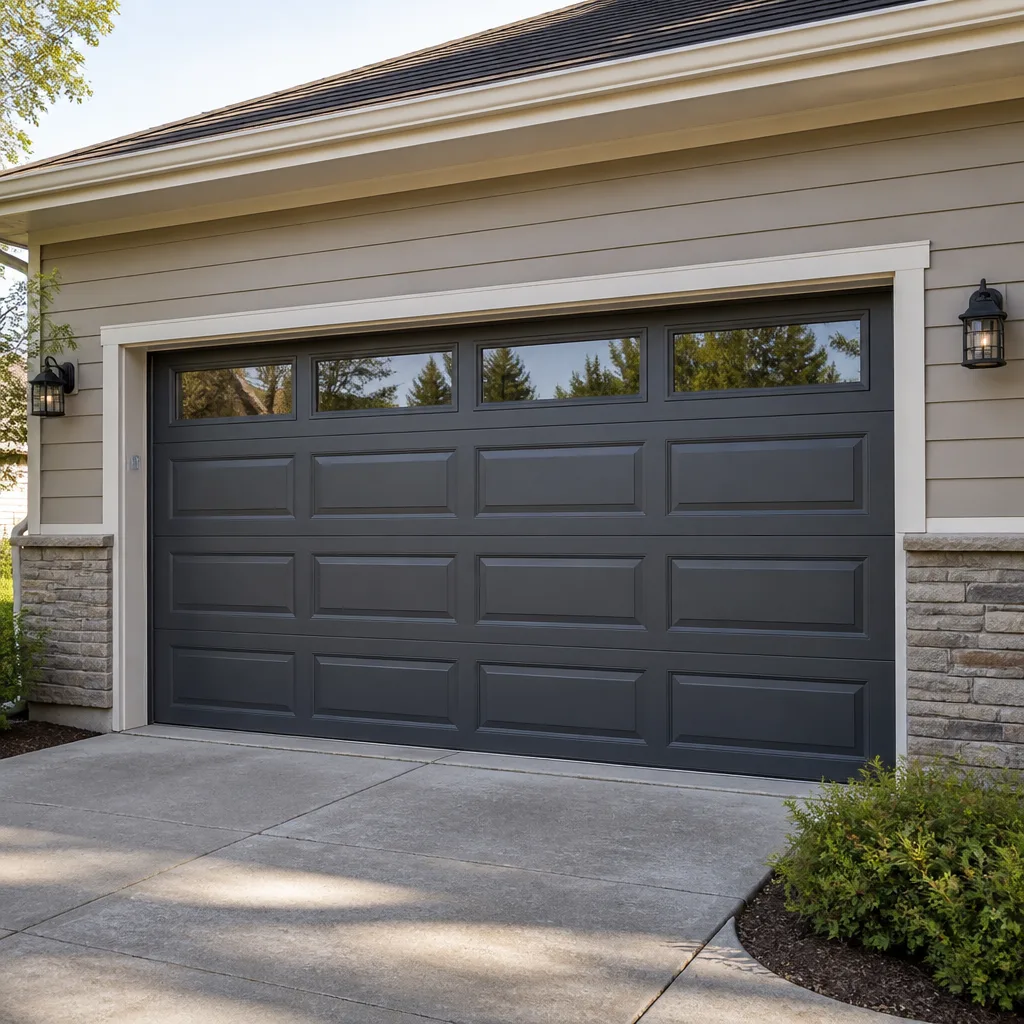 Raised-panel steel
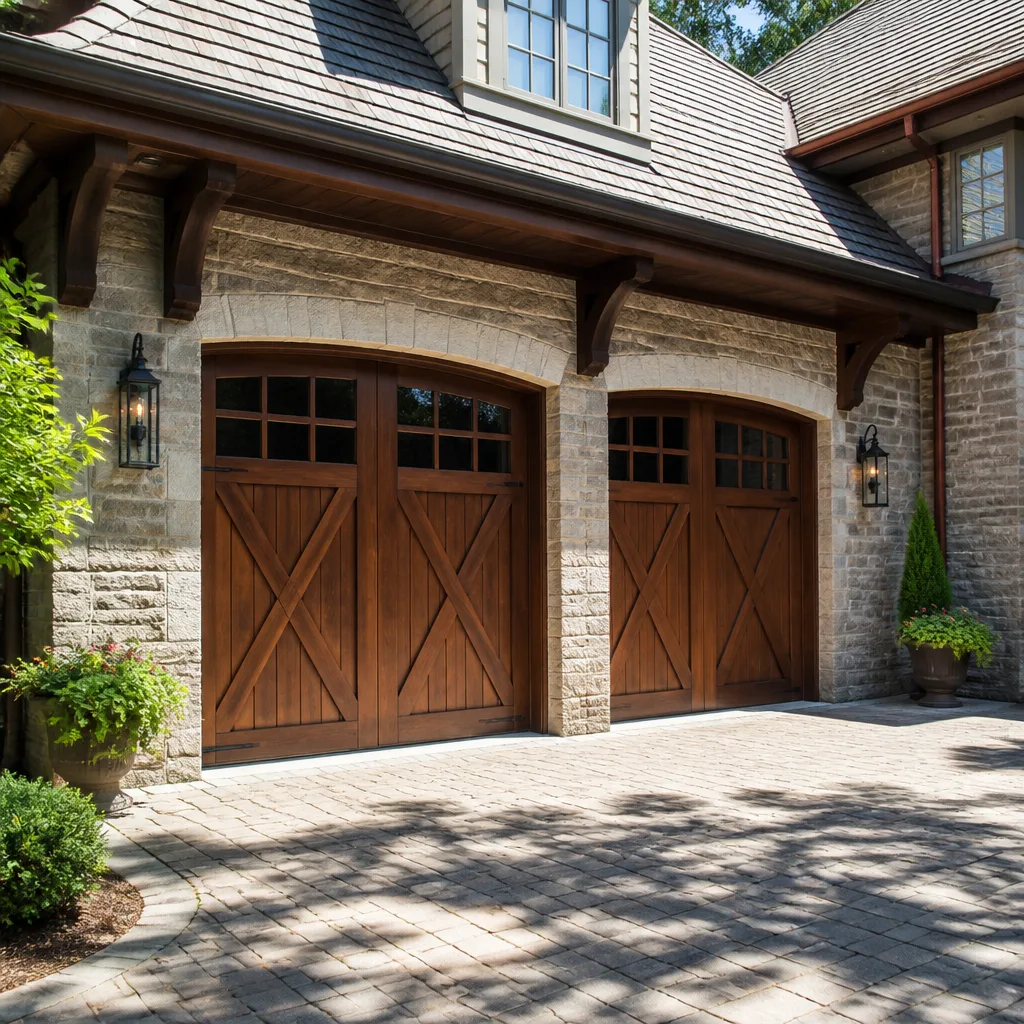 Carriage house
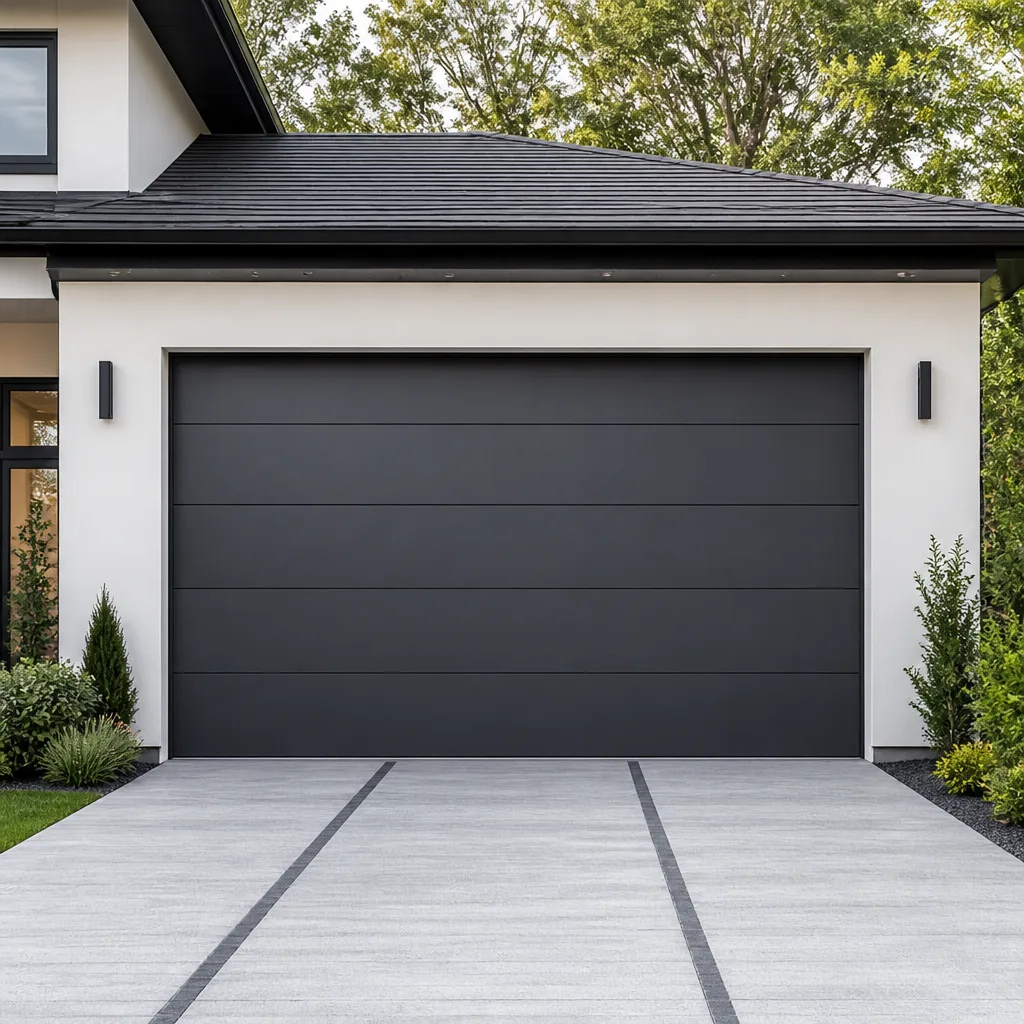 Modern flush
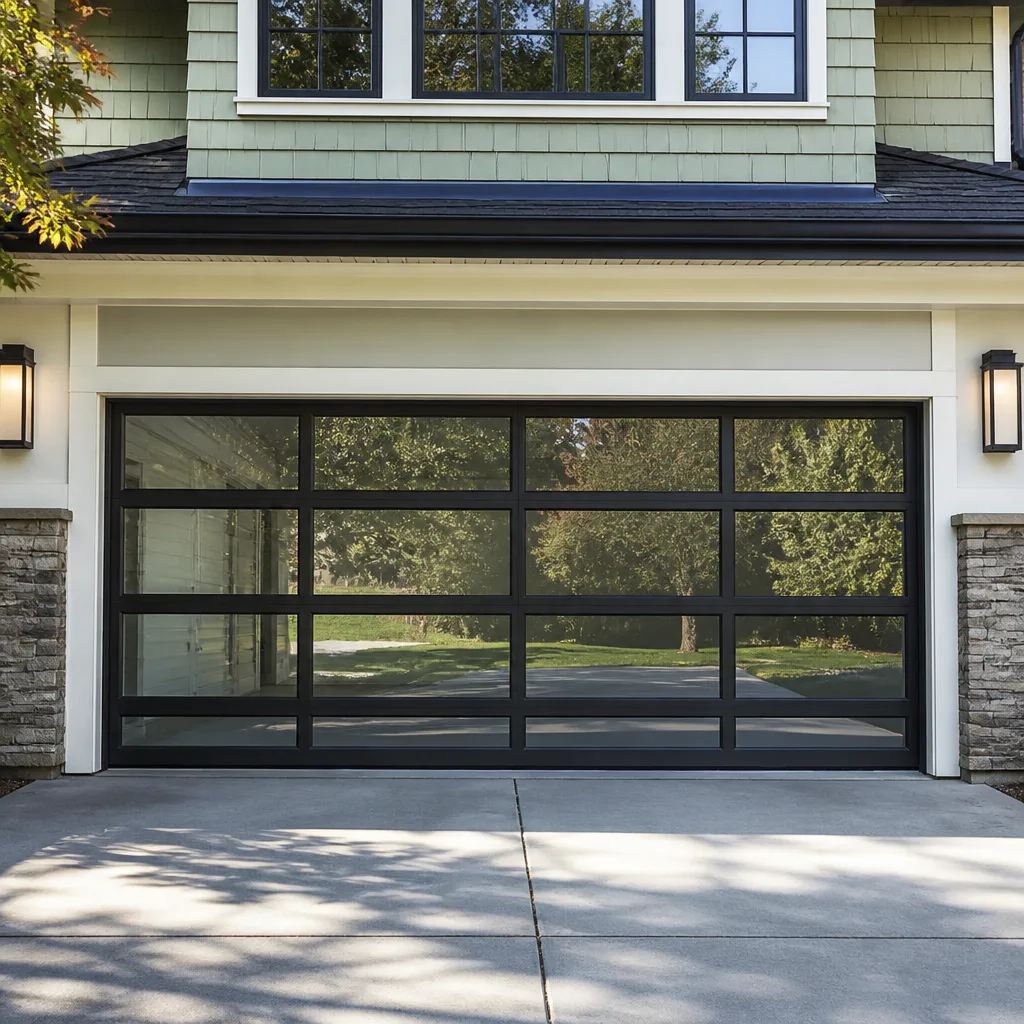 Full-view glass
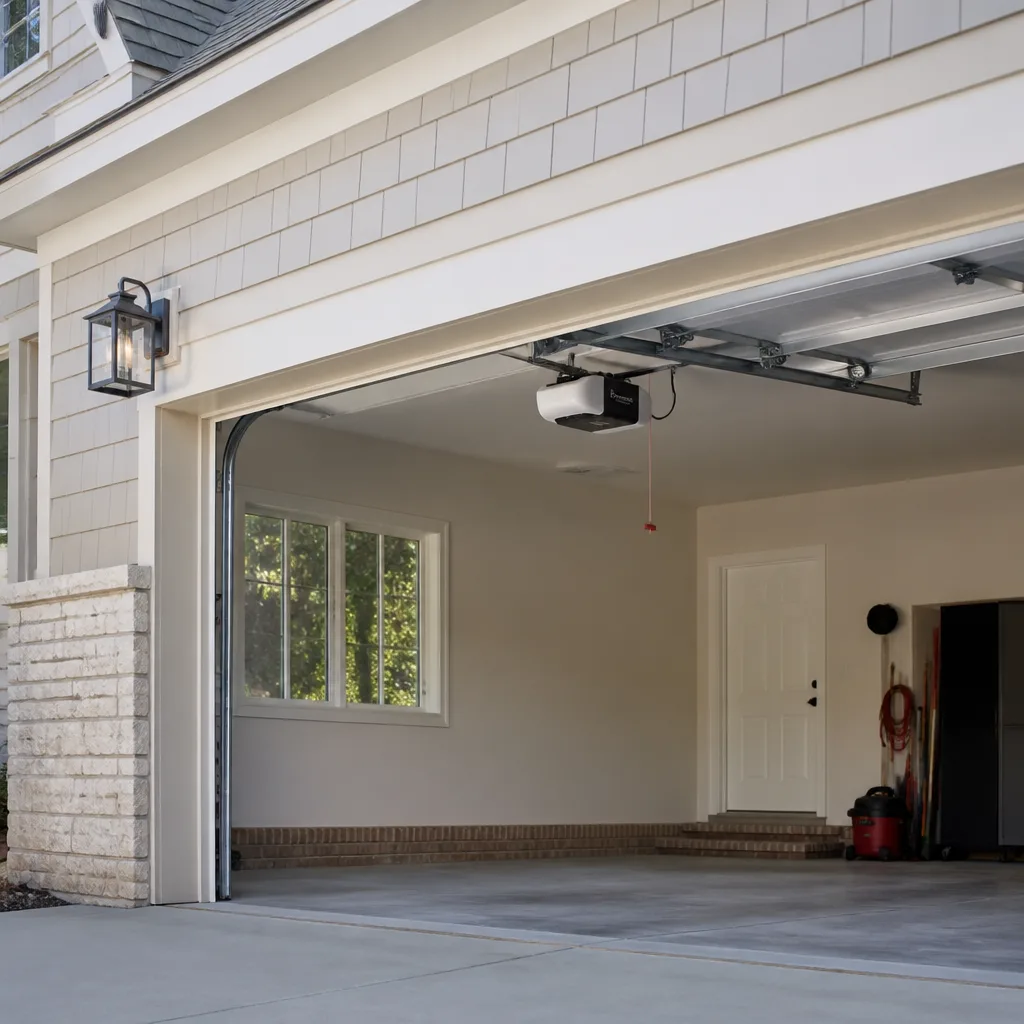 LiftMaster openers
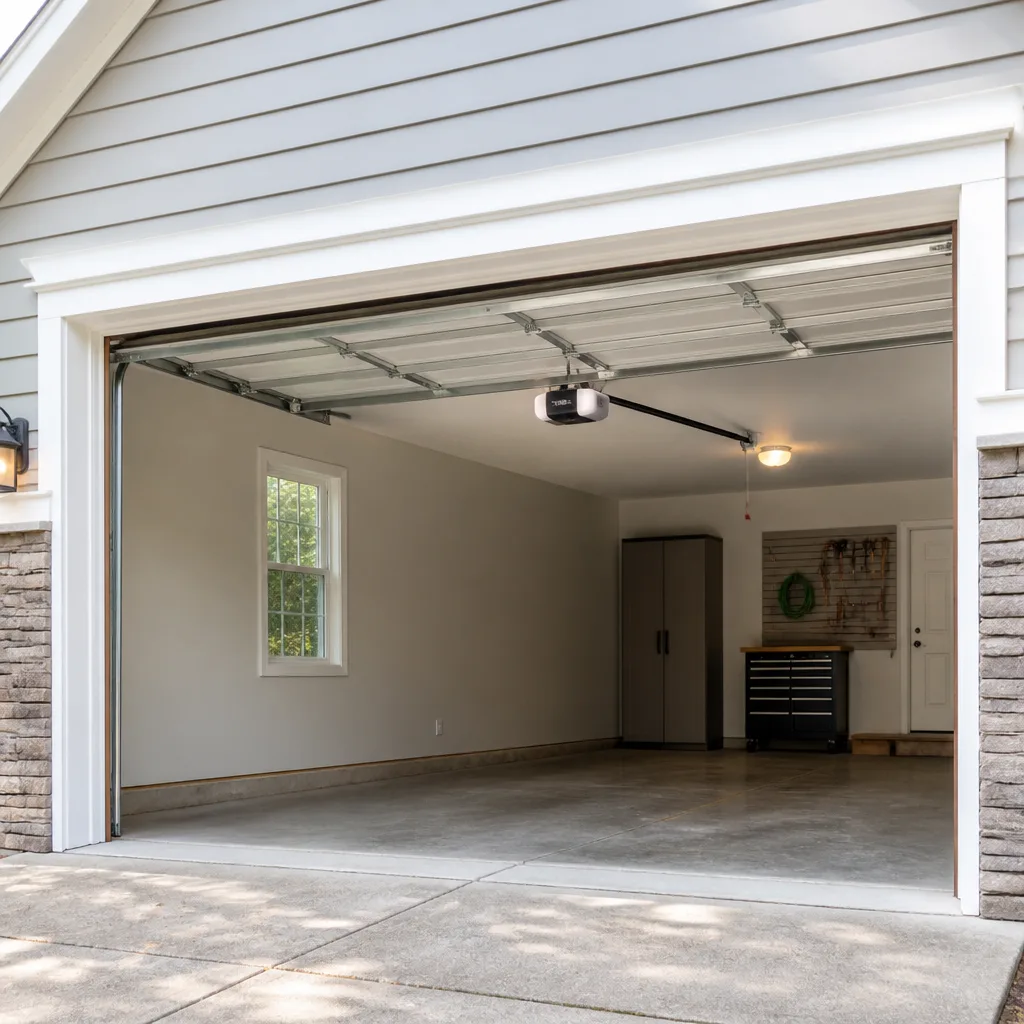 Chamberlain openers
Full 25-point door and opener safety check with every visit - springs, cables, rollers, tracks, and your LiftMaster or Chamberlain opener included
You get a price before we start. It does not change when the pro arrives.
Get your free estimateGarage Door Warning Signs: A Yonkers Homeowner’s Reference Guide
A garage door that hesitates for two seconds before it moves isn’t being stubborn. It’s telling you the spring tension is off-balance and the opener motor is compensating for it. That motor won’t compensate forever. The same is true of a click near the drum, a grind at the top of travel, or a rust line across a torsion coil – each one is a specific component reporting a specific problem, usually weeks before it becomes a real emergency. Most homeowners in Yonkers file these signals under “just noise” until the door stops dead. This guide decodes the symptoms by component so you can tell the difference between a cheap adjustment and a dangerous failure, and know exactly when to stop using the door.
Quick Answer
Garage door warning signs in Yonkers usually fall into three groups: sounds (grinding, popping, squealing, banging), visual cues (frayed cables, cracked brackets, rust on springs), and operational symptoms (slowness, jerking, reversing, uneven closing). Fixable-on-your-own signs are rare, but some are safe to monitor; others – especially a frayed cable, a bent spring, or a door that has dropped or reversed unexpectedly – mean you should stop using the door and call for same-day service. When in doubt, treat any sign near the springs, cables, or brackets as a stop-use signal.
Styles & brands we work with
- Raised-panel steel
- Carriage house
- Modern flush
- Full-view glass
- LiftMaster openers
- Chamberlain openers
Table of Contents
- Noise Diagnosis: What Grinding, Popping, Squealing, and Banging Actually Mean
- Visual Signs Most Homeowners Miss
- Operational Symptoms by Severity: Monitor, Service, or Stop Using
- Opener-Side vs. Door-Side: A Safe Disconnect Test
- The Two Most Dangerous Failure Modes: Free-Fall and Spring Snap
- Why Yonkers Homes See These Signs Sooner
- A Simple Preventive Routine for Yonkers Homeowners
- What Warning Signs Typically Cost to Fix in Yonkers
Noise Diagnosis: What Grinding, Popping, Squealing, and Banging Actually Mean
Sound is the earliest diagnostic signal a garage door gives you, and each type of noise points to a specific component. If you can name the noise, you can narrow the problem to about two or three moving parts before anyone touches the door. That matters in a Yonkers home where the garage sits under a bedroom or shares a wall with the kitchen – the sounds are close, and the smallest change echoes.
Here’s how we map the four most common noises to the components behind them:
- Grinding. Usually a roller that has seized or lost its bearings, or a track that has bowed enough to bind the roller housing. Grinding at the opener head itself often means the drive gear is worn. Grinding that follows the door all the way up and down points to a roller or track issue, not the opener.
- Popping. A single loud pop each time the door passes a certain point almost always means a torsion spring has slipped one coil, or a panel hinge has bent and is snapping back into place. A popping sound that repeats more often than once per cycle suggests a cable starting to jump the drum.
- Squealing. Metal-on-metal squeal is a lubrication or alignment issue – usually dry hinges, dry rollers, or a torsion bar that has shifted slightly. Squealing is rarely dangerous on its own, but ignoring it accelerates wear on the parts around it.
- Banging. Banging is the loudest and often the most benign-sounding problem with the worst cause. A bang at the close usually means the door is slamming into the floor because a limit switch on the opener is set wrong. A bang at the open can mean the door is hitting the stop bolt harder than it should – also a limit issue, but one that stresses the springs on every cycle.
One caution: a single loud crack followed by the door going slack, hanging at an angle, or the opener running without moving the door is not the same as popping or banging. That is almost always a broken spring or a snapped cable. Stop using the door and call for emergency service right away. If you’re in Yonkers and the door won’t move at all, our team covers Garage Door Repair Yonkers Pros for exactly this kind of call.
Visual Signs Most Homeowners Miss
You don’t need to touch anything to spot the three most important visual signs on a garage door – a cable starting to fray, a bottom bracket cracking, and rust banding across a torsion spring. All three are visible with a flashlight and about two minutes of looking, and all three are in the “stop using the door and call today” category.
Frayed or birdcaged cables near the drum
Look at the cable where it winds onto the drum at each top corner. A healthy cable is smooth and uniformly wound. A failing one has a “birdcage” look – strands have separated and curled off the main cable, or you can see broken wire ends poking out. A frayed cable can snap under full tension with no warning. If you see one, do not cycle the door. This is why we treat garage door repair as a same-day priority when a customer describes a birdcaged cable on the phone.
Cracks in the bottom bracket
The bottom bracket is the L-shaped steel plate at each bottom corner where the cable attaches to the door. Over time, hairline cracks form along the bend. Stand to the side of the door (never directly in front of it) and look at the bracket with a bright light. Any visible crack, or any bracket that has started to pull away from the door panel, means the cable is being held by less metal than it needs to be.
Rust banding on torsion springs
Torsion springs are the horizontal coils mounted on the wall above the door. Rust on a spring is normal in small amounts. What isn’t normal is rust concentrated in a ring around the coil, or rust that has started to flake off the wire. That pattern means the spring has been flexing unevenly and the wire gauge is thinning at that point. It’s the strongest pre-failure signal a spring gives. A spring with visible rust banding should be replaced before it snaps, not after.
Two more visual checks worth adding to the habit: look at the panel seams for cracked hinges (a hinge that has snapped is holding a panel with one leg), and look at the tracks where they meet the floor – a track that has bowed outward by more than an inch will start dropping rollers. Neither is as urgent as a frayed cable, but both are cheap to fix now and expensive to fix later.
Operational Symptoms by Severity: Monitor, Service, or Stop Using
Not every warning sign means the same thing. Some you can watch, some you should schedule, and some mean the door shouldn’t move again until a technician sees it. Here’s how we sort the symptoms that come up most often on Yonkers doors.
Signs you can monitor (no immediate action needed)
- Occasional squeal on the first cycle of the day that goes away once the door warms up
- Minor rust spotting on rollers or hinge pins, no flaking
- Slight wobble at one top corner that the door still rides through cleanly
- Light scraping sound where a weather seal meets the floor
Monitoring still means checking once a month. If any of these signs change in character – get louder, become more frequent, or add a second symptom – move it to the service category.
Signs that need same-week service
- The door reverses before it fully closes, or hits the floor and bounces back up
- The opener strains noticeably to lift the door, or the door slows as it rises
- Grinding that has moved from one part of the cycle to the entire cycle
- The door opens at an angle (one side higher than the other)
- Hinges visibly bent or missing screws
Same-week service means the door can still be used, but the wear is accelerating. A door that opens unevenly is loading one spring more than the other on every cycle, which shortens the life of both.
Signs that mean stop using the door
- Any snapped or visibly bent torsion spring
- A frayed, birdcaged, or visibly broken cable
- A door that has dropped or fallen partway and is now hanging at an angle
- Any door where a technician would need to lift it by hand to test it after a cable or spring failure
- A door that runs and hits an obstruction with no safety reverse
Any one of these is a call-us-now signal. Do not try to lift the door by hand, do not try to close it “one more time” to see if it settles. A door with a failed spring or cable carries the full weight of the door on whatever is left holding it. In our experience the second failure in these situations is always worse than the first. If you need garage door opener repair as well, mention that when you call so we can plan the visit properly.
Opener-Side vs. Door-Side: A Safe Disconnect Test
Before you call anyone, you can narrow down whether the problem is in the opener or the door itself – without touching springs, cables, or tracks. The test is called a manual disconnect, and every opener has a pull cord (usually red, hanging from the rail) that releases the door from the carriage. It’s the single most useful diagnostic step a homeowner can safely take, and it’s the first question we ask when a Yonkers customer calls in with a door that “won’t work.”
Here’s the sequence, in order:
- Close the door completely and make sure nothing is moving.
- Pull the release cord straight down and away from the door. You should hear and feel the carriage disengage.
- Lift the door by hand about halfway and let go. A properly balanced door will hold its position, or drift down slightly. A door that feels heavy, wants to fall, or wants to rise all on its own is out of balance. That means a spring problem, not an opener problem.
- Run the opener with the door disconnected. If the carriage moves smoothly along the rail with no unusual noise, the opener is fine and the problem lives in the door. If the carriage grinds, stalls, or won’t move at all, the opener is the source.
- Re-engage the carriage by pushing the door back up until it clicks into the carriage, or by running the opener until it catches. Never force the release handle back in.
The disconnect test is safe because it takes the springs and cables out of the equation – you’re not loading or unloading anything, just releasing the carriage. What it can’t tell you is which spring is bad, or whether a cable is about to fail. That’s the part that needs someone with the right tools. We work on the door you already own, whether it’s a Clopay, an Amarr, a Wayne Dalton, or a Craftsman opener, which is why the disconnect test result usually tells us exactly which technician and which parts to send.
The Two Most Dangerous Failure Modes: Free-Fall and Spring Snap
Two failures cause the most serious injuries on residential garage doors: a door coming down when someone is under it, and a torsion spring letting go at full tension. Both give warning signs, and both are preventable if the signs are read correctly.
What precedes a free-fall
A free-fall happens when the door loses both lift support and cable control at the same time – usually a snapped cable on one side while the spring is already weak or failing. Before that moment, the door usually shows:
- Cable fraying or birdcaging at the top corner drum (often on one side first)
- A door that closes a fraction of a second faster than it used to
- A door that “catches” briefly or drops 1-2 inches as it starts to close
- Visible slack in one cable when the door is fully open
- A bottom bracket with a crack or a pulled screw
Any of these signs on their own means stop using the door until a technician checks it. Free-falls are rare, but the signs preceding them are not – they show up on plenty of Yonkers doors weeks before the door drops. This is exactly the kind of call our emergency service exists for.
What precedes a spring snap
A torsion spring stores enough energy to throw a person across a room if it lets go while someone is working near it. That’s why we never recommend any homeowner touch a spring, even to “test” it. The signs it gives before it snaps:
- Rust banding or flaking on the coil (the most reliable single indicator)
- A door that has become noticeably harder to lift by hand over the past few months
- The opener straining to lift a door it lifted easily last year
- A popping sound during operation, especially near one end of the torsion bar
- The door resting off-center when fully open (one side higher)
If you see any of these, call for a spring inspection before the door snaps. Our team treats spring repair as its own dedicated service because of the danger – if you’re wondering what this kind of problem usually costs, our garage door installation and repair teams can give you a written quote on the spring or on a full replacement if the door is past the point of repair.
A one-line safety note we give every Yonkers homeowner who calls about spring signs: do not try to lubricate, adjust, or “test” the spring yourself, and do not let anyone stand near the door while it’s operating. The spring is under load at all times, even when the door is down.
Why Yonkers Homes See These Signs Sooner
Garage doors in Yonkers face a specific set of pressures that accelerate the wear patterns in this guide. Most of the housing stock here is older than the national average, and many doors have been through several openers and at least one round of panels. That matters when you’re trying to read the signs.
Three factors in particular show up again and again on Yonkers doors:
- Hillside and slope lots. Homes on the steeper streets in Yonkers – especially on the western and northwestern edges of the city – often have garage doors that sit into a hillside or under a house. That means doors run on a slight incline more often than flat, which loads the springs and opener motor unevenly and accelerates rust on the bottom brackets where water drains down onto them.
- Old doors with new openers. A very common pattern in Yonkers is a 20- or 30-year-old wood or steel door mated to a modern opener installed when the original failed. The modern opener often has enough torque to lift a heavy door – until the springs weaken – so the owner doesn’t notice the door has become too heavy until the opener starts stalling or the springs go. If your door is older than your opener, watch for opener strain as a sign of spring wear even before the door feels heavy.
- Cold snaps and wet springs. Yonkers gets the full range – humid summers and regular freezing nights through winter. The freeze-thaw cycle loosens hinges and stiffens grease in the tracks between seasons. A door that grinds slightly in the wet months and smooths out in summer is telling you its lubrication schedule needs attention, not that the problem has resolved.
None of these are exotic problems, but together they mean a Yonkers door often shows warning signs earlier than a door in a newer subdivision with flat driveways and one original opener. That’s why we ask for the door’s age, the opener brand, and whether the garage is under the house or separate when a homeowner calls – the answers change what we look at first.
A Simple Preventive Routine for Yonkers Homeowners
The best way to avoid a spring snap or a free-fall is a five-minute routine, once a month, that doesn’t require any tools and doesn’t put you near anything dangerous. Here’s the sequence we recommend:
- Listen on the first cycle of the day. Stand inside the garage with the door down. Open it. Note any noise that isn’t a smooth hum – grinding, popping, squealing, or banging.
- Look at the cables at both top corners. Flashlight. Look for fraying, birdcaging, or slack. If any cable looks off, don’t cycle the door again until a technician has seen it.
- Run the disconnect test. Release the carriage, lift the door halfway by hand, and check that it holds. A door that drifts down or wants to rise is out of balance.
- Look at the springs. Check both torsion coils for rust banding or flaking. Run your eyes from one end of each coil to the other. Do not touch.
- Test the safety reverse. With the door connected, close it and pass something solid (like a piece of wood) under the path of the door. The door should reverse on contact. If it doesn’t, stop using the door and call.
- Look for weather-strip wear. A cracked bottom seal lets water into the bottom bracket area. It’s cheap to replace and prevents the bracket rust that leads to cable problems.
If any step turns up something on the “stop using” list from earlier in this guide, don’t try to sort it out yourself. For general wear that isn’t urgent, a single service visit for lubrication, adjustment, and inspection usually prevents the bigger problems – and if the door is already past the point of being worth repairing, an honest assessment on a garage door installation is a better call than another round of repairs on a tired door. We’ll tell you which one actually makes sense.
The last part of the routine is a phone check: if you’re not sure what you’re hearing or seeing, describe it to someone who works on doors every day. It costs nothing to ask, and it’s a lot cheaper than a snapped spring.
What Warning Signs Typically Cost to Fix in Yonkers
The cost of fixing a warning sign depends entirely on which component has failed, and how far the failure has gone. A grinding roller is a small job. A snapped spring on a heavy door is not. These are typical ranges for the Yonkers area, and the written quote after we see the door is the number that counts.
| Symptom or component | Typical estimated cost | What’s usually involved |
|---|---|---|
| Squealing, grinding from dry rollers or hinges | $120 – $200 | Cleaning, lubrication, minor hinge tightening |
| Banging or slamming at close (limit adjustment) | $100 – $180 | Reprogramming the opener’s open and close limits |
| One torsion spring replaced (spring only) | $180 – $340 | One spring swapped by a trained technician |
| Matched pair of torsion springs replaced | $360 – $680 | Both springs replaced at once (usually done together) |
| Frayed or snapped cable replaced | $150 – $280 | New cable, drum check, bottom bracket inspection |
| Bent or bowed track realignment | $180 – $320 | Track straightening or replacement of one section |
| Opener drive gear or logic board replacement | $250 – $450 | New drive gear or control board, full opener safety test |
Two things worth knowing about how this works in practice:
- Springs are priced per spring. A matched pair is usually replaced together – quoting one spring against a pair of failing springs would be misleading. If both springs are the same age, they’re usually both due.
- Every price is quoted and agreed before any work starts. We measure, quote, and only then do we take anything apart. That means you know the number before a single spring is touched.
The cost of ignoring a warning sign is higher than the cost of fixing it. A grinding roller that’s ignored ruins the track. A weakened spring that snaps often takes a cable with it and can pull a bracket off the door. A door that free-falls is an insurance problem and a safety problem at the same time. In our experience the cheapest repair on this list – a lubrication and adjustment visit – is the one that prevents most of the expensive ones.
Common Mistakes to Avoid
- Treating noise as normal. A garage door that has always made a small amount of noise is one thing. A door that has started to make a new noise, or one that’s louder every month, is telling you a component is wearing. If the noise changed, something changed.
- Using the door “just once more” after a spring or cable sign. A spring showing rust banding or a cable that’s started to fray can fail on any cycle. There is no safe “one more time” on a loaded spring or a damaged cable.
- Trying to adjust or lubricate the springs and cables yourself. The two most dangerous components on a garage door are the torsion springs and the cables running to them. Anything beyond a visual check needs a trained technician with the right tools.
- Trusting the opener to compensate for a heavy door. Modern openers are strong enough to lift a door that has lost significant spring tension. That’s the danger – the opener hides the problem until it stalls or the spring snaps. If the door feels heavier than it did last year, that’s the sign.
- Skipping the disconnect test. It takes two minutes and tells you whether the problem is the opener or the door. Skipping it means a technician (or worse, an electrician) gets called out for the wrong cause.
- Assuming a hillside Yonkers garage needs a completely different maintenance schedule. It doesn’t – the same monthly checks apply. But hillside doors do load their springs and brackets harder, so a rust check on bottom brackets should get extra attention in those homes.
- Not checking the safety reverse. A door with a broken safety reverse can close on a child or a pet without stopping. This is the single most important safety test on any door, and it should be checked monthly.
See the difference
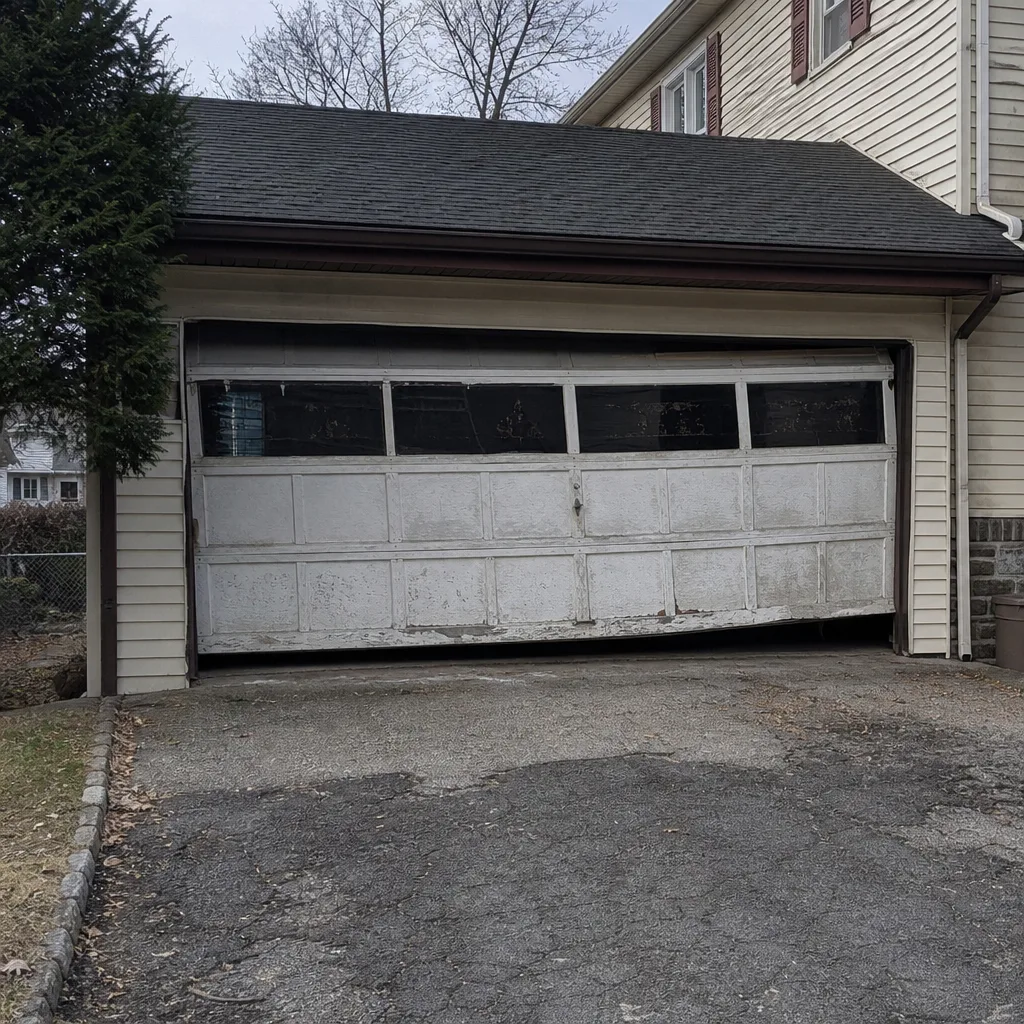 Before
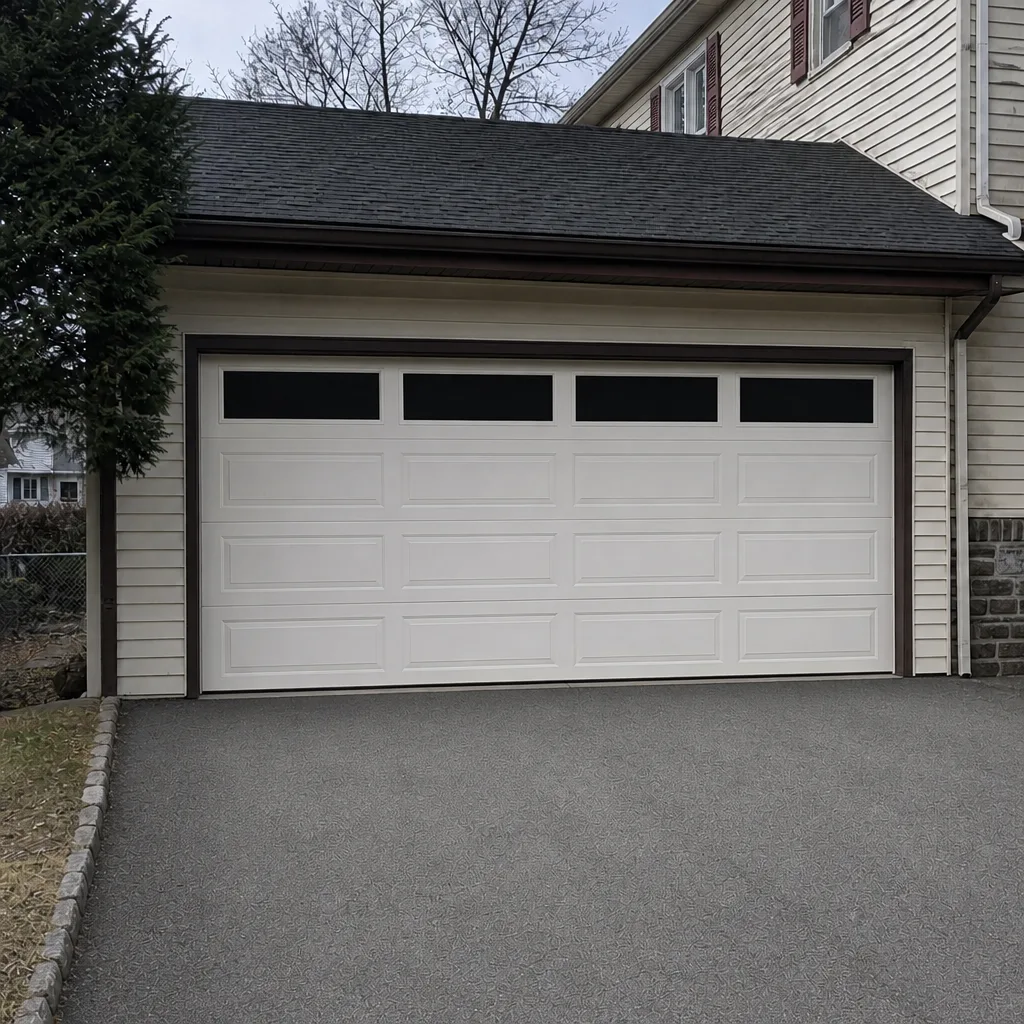 After
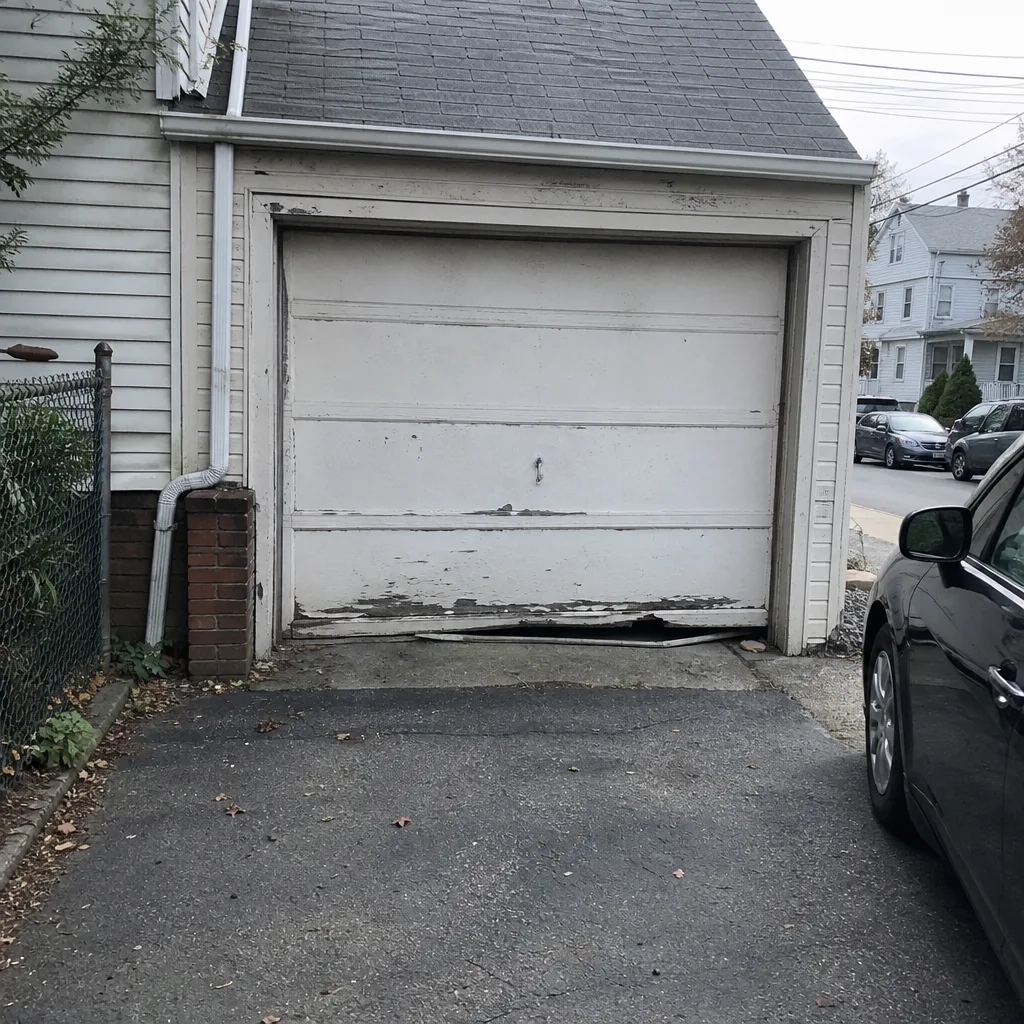 Before
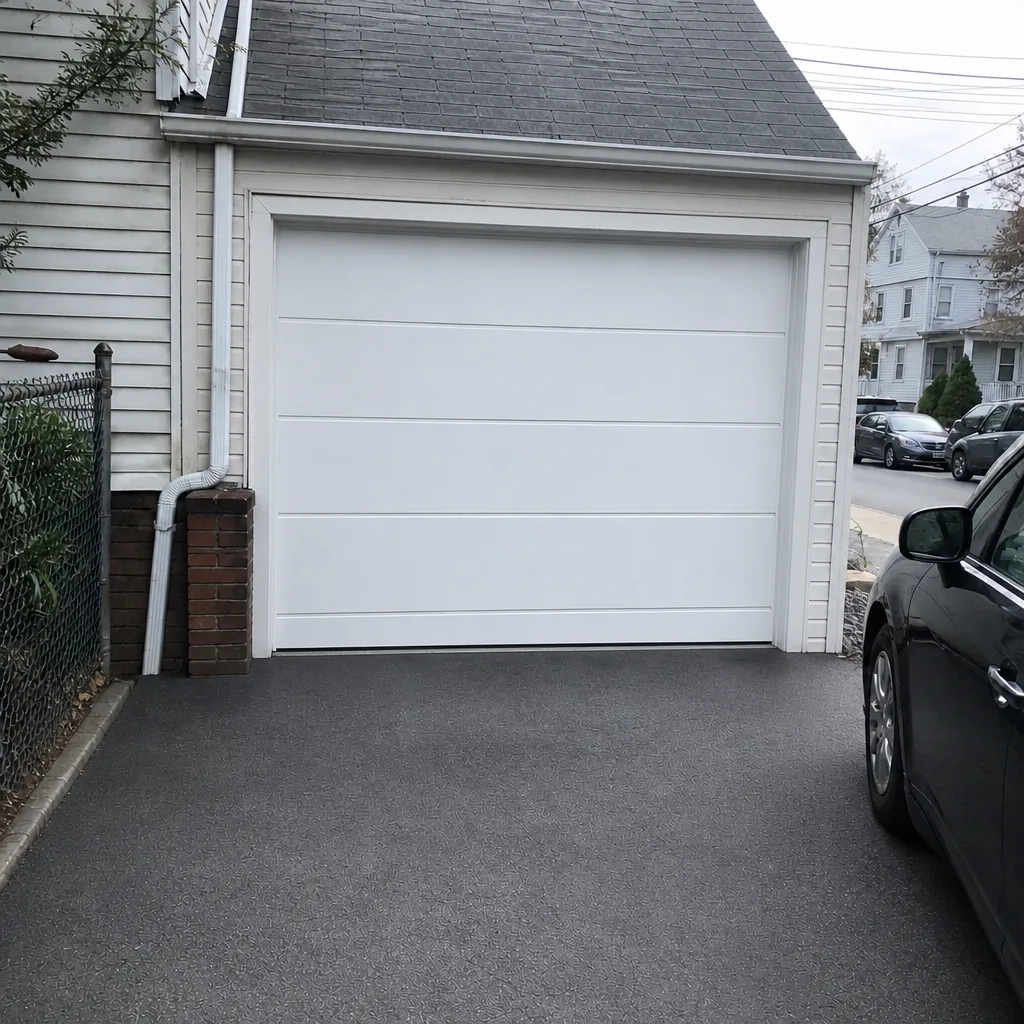 After
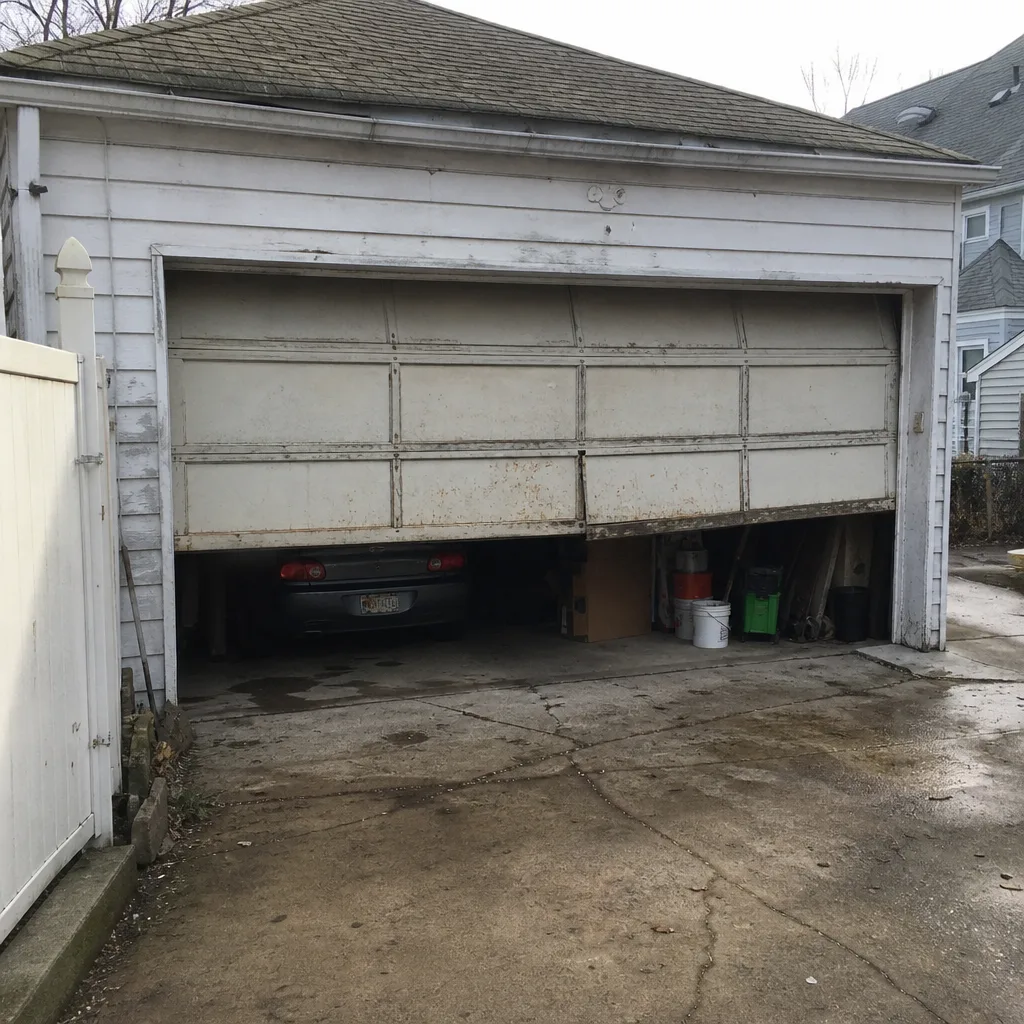 Before
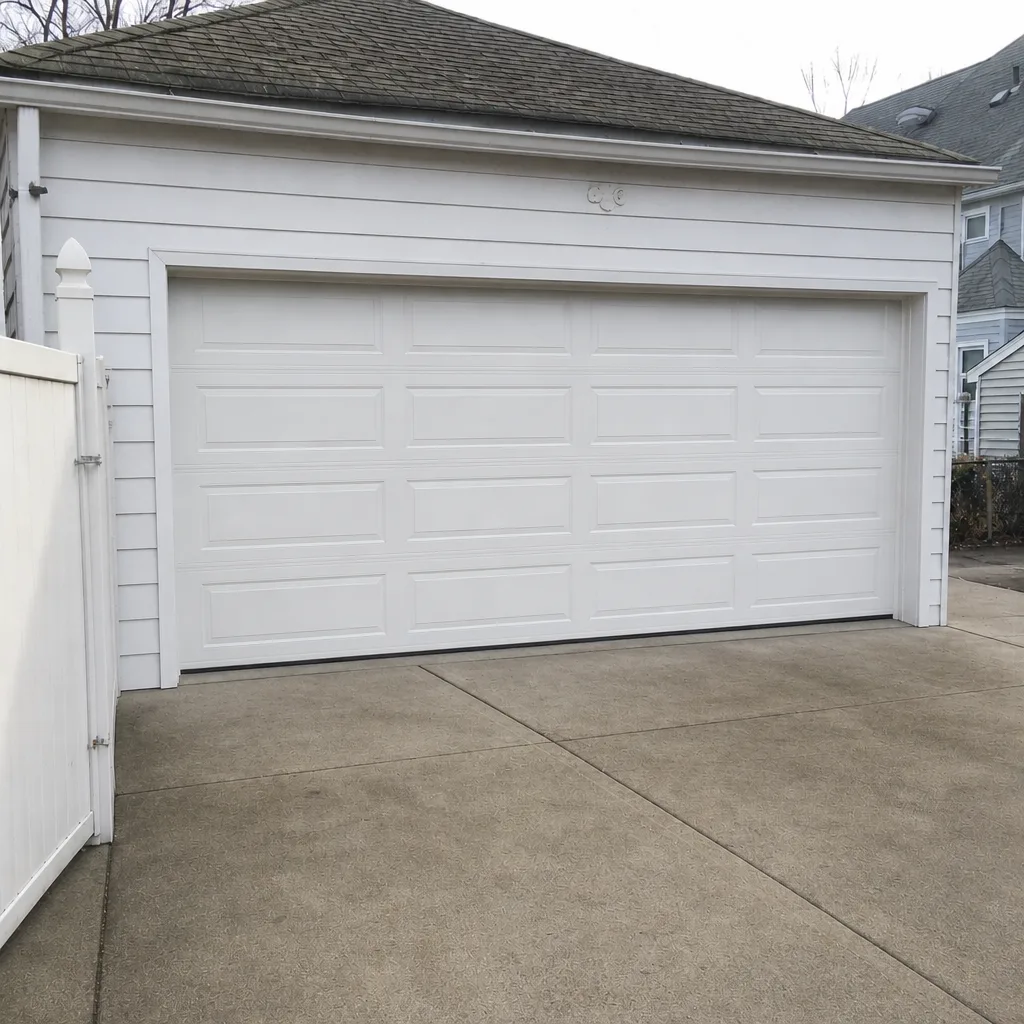 After
When to Call a Professional
Call a professional if you see any of the following: a frayed, birdcaged, or broken cable; a torsion spring with rust banding or visible deformation; a door that has dropped, tilted, or started to fall; a door that won’t reverse on obstruction; a disconnect test that shows the door is out of balance; a grinding noise that has moved from one stage of the cycle to the whole cycle; or a bottom bracket with a crack. If you’re not sure which of these you’re looking at, call anyway and describe what you’ve seen – we can usually tell from the description whether it’s safe to keep using the door. Garage Door Repair Yonkers Pros offers free estimates in Yonkers. Call (833) 690-5368 and we’ll walk through the signs with you, quote the work before we start, and get the door safe.
Frequently Asked Questions
A garage door spring typically shows rust banding, a slight sag, or a popping sound near one end of the coil first. In our experience the earliest sign most homeowners notice is that the door feels heavier to lift by hand than it did the year before, or the opener begins to strain on lift. Any of these signs means you should stop using the door and call for a spring inspection. Call (833) 690-5368 for a free estimate.
Spring repair in Yonkers typically runs $180 to $340 for a single torsion spring, and $360 to $680 for a matched pair, since both springs are usually replaced together. The written estimate after we see the door is the final number, and it’s agreed before any work starts. Call (833) 690-5368 for an exact quote – estimates are free.
Sometimes yes, sometimes no. Squealing from dry hinges or a light grinding from a roller are usually safe to use short-term while you schedule a service visit. Popping near the springs, banging at the top or bottom of travel, or any noise accompanied by the door opening unevenly means stop using the door. If you’re not sure which situation you’re in, call (833) 690-5368 and describe it – we’ll tell you whether to stop using the door.
Use the manual disconnect test on the opener. Pull the release cord (the red handle hanging from the rail), lift the door halfway by hand, and let go. A balanced door holds its position; a door that wants to fall or rise on its own has a door-side problem. Then run the opener with the door disconnected – if the carriage moves smoothly, the opener is fine. If it grinds or stalls, the problem is the opener. Either result is useful to have ready when you call.
A snapped spring, a snapped or frayed cable, a door that has dropped or tilted, or a door that won’t reverse on obstruction are all emergency-signal conditions in Yonkers – stop using the door and call for same-day service. A door hanging at an angle or resting on one side is carrying the door’s full weight on whatever is left, and the next cycle is the most dangerous one.
It depends on the door’s age, the panel condition, and whether the springs and opener are both original. A door with one bad spring and sound panels and hardware is almost always worth repairing. A door with bent panels, cracked brackets, a frayed cable, and an original opener may cost less to replace than to repair piece by piece. We’ll tell you which one actually makes sense – we won’t push a replacement onto a door that still has years in it.
The Bottom Line
Every serious garage door failure gives warning signs, and the signs are readable by component: grinding points to rollers or tracks, popping to springs or hinges, banging to limit switches, rust banding to a spring about to snap. The three visual cues most homeowners miss – frayed cables, cracked bottom brackets, rust banding on springs – are the ones worth checking every month. If a sign puts the door in the stop-using category, stop using it and call. The disconnect test is the one safe diagnostic step any homeowner can take. And when a repair is more than the door is worth, we’ll tell you before you spend the money.
Our technicians have up to 15 years of experience and are trained to service equipment from LiftMaster, Chamberlain, Genie, Clopay, Amarr, Wayne Dalton, Craftsman, and Raynor. Whether you’re reading a warning sign for the first time or you’ve been putting off a spring inspection for months, call Garage Door Repair Yonkers Pros at (833) 690-5368 for a free estimate on any garage door repair, opener repair, spring repair, or full installation in Yonkers. We quote the work before we start, and the written estimate is the price you pay.
Written by the team at Garage Door Repair Yonkers Pros.